Gratitude Builds Resilience. Growth Mindset Builds Grit.
Let’s be honest — our classrooms, our schools, our world — they’re moving faster than the human heart can process.
I am frustrated. Not at leaders. Not at districts. But at the pace of everything.
We are living in a culture obsessed with speed. Instant downloads. Same-day shipping. Rapid responses. Immediate results. Society has trained us to believe that if something isn’t fixed quickly, something is wrong. We have to take our time back. Because, that mindset has quietly seeped into education.
When behavior issues rise. When culture feels fractured. When parent engagement declines. The instinct — in some, not all, districts and organizations— is to search for a turnkey solution. A program. A speaker. A training. Something that can “adjust” student behavior and increase parent involvement quickly. I understand why.
The pressure on district leaders is enormous. Data is public. Boards are watching. Families are vocal. Results are expected now.
But here is the truth: This kind of work was never built to be done quickly. Culture is not a quick fix. It is not a compliance strategy. It is not a one-day reset. Culture is human work. And human work takes time. This shouldn’t be an uncomfortable truth- just the truth.
At kid-grit, one of our biggest challenges is that we don’t offer a quick fix. We don’t sell one-day solutions. We don’t promise immediate transformation. We don’t believe behavior shifts without relationship shifts.
To be honest, from a business standpoint, that can slow growth. Quick fixes are easier to buy. Long-term partnerships require deeper commitment. But here’s the upside: Most of our partnerships last between two and five years. Why? Because sustainable culture change is built on relationships, shared ownership, and time.
When leaders slow down, pause, and address the root of culture challenges in a consistent and systemic way, school turnaround looks different. It becomes durable. It becomes embedded. It becomes part of the community — not just another initiative that fades by spring.
So, how do we help leaders see that slowing down is not weakness — it’s strategy?
Too often, conversations between districts and partners sound like this:
Instead, we shift the conversation:
When we approach leaders as collaborators — not clients — the dynamic changes. The work becomes shared. The responsibility becomes shared. The outcomes become shared.
We believe in co-design. Rather than prescribing a solution, we explore alignment:
Co-designing allows both sides to determine whether we are truly a good fit. Not every district needs us. Not every partnership is aligned.
But when there is alignment, the work is stronger because it was built together — not delivered to someone. Culture cannot be imported. It must be cultivated.
When behavior or culture is struggling, urgency is high. But urgency can narrow vision. We ask leaders:
When we shift from immediate behavior compliance to long-term culture outcomes, the conversation deepens.
And if we have the resources to help reach those goals, we step in as a committed partner.
The biggest challenge is getting the first call with leadership.
When we do, leaders are often surprised by our questions. They expect solutions. Instead, they get curiosity.
It is taking discipline not to jump straight into solving their pain points. But slowing down and truly learning who they are transforms the relationship. It moves the work from transactional to authentic. Authentic partnerships create sustainable change.
School and organizational culture cannot be outsourced.
It cannot be downloaded. It cannot be fixed in a day.
It can, however, be built — together.
If you want to learn more about how we do it, email me and let’s start building!

Let’s be honest — our classrooms, our schools, our world — they’re moving faster than the human heart can process.

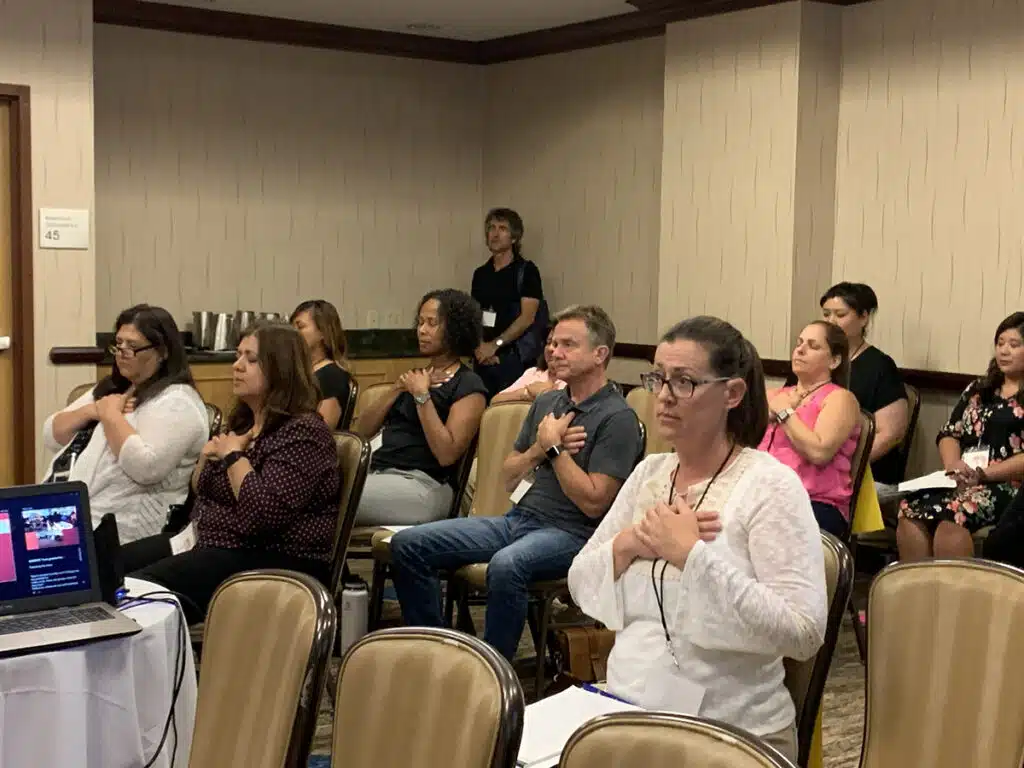
Change is life’s greatest teacher. Discover how resilience, reflection and adaptability can guide us through every season of growth.

If you’ve ever joined a kid-grit training, you’ve heard us proudly say that our work supports people ages 5 to 105.